
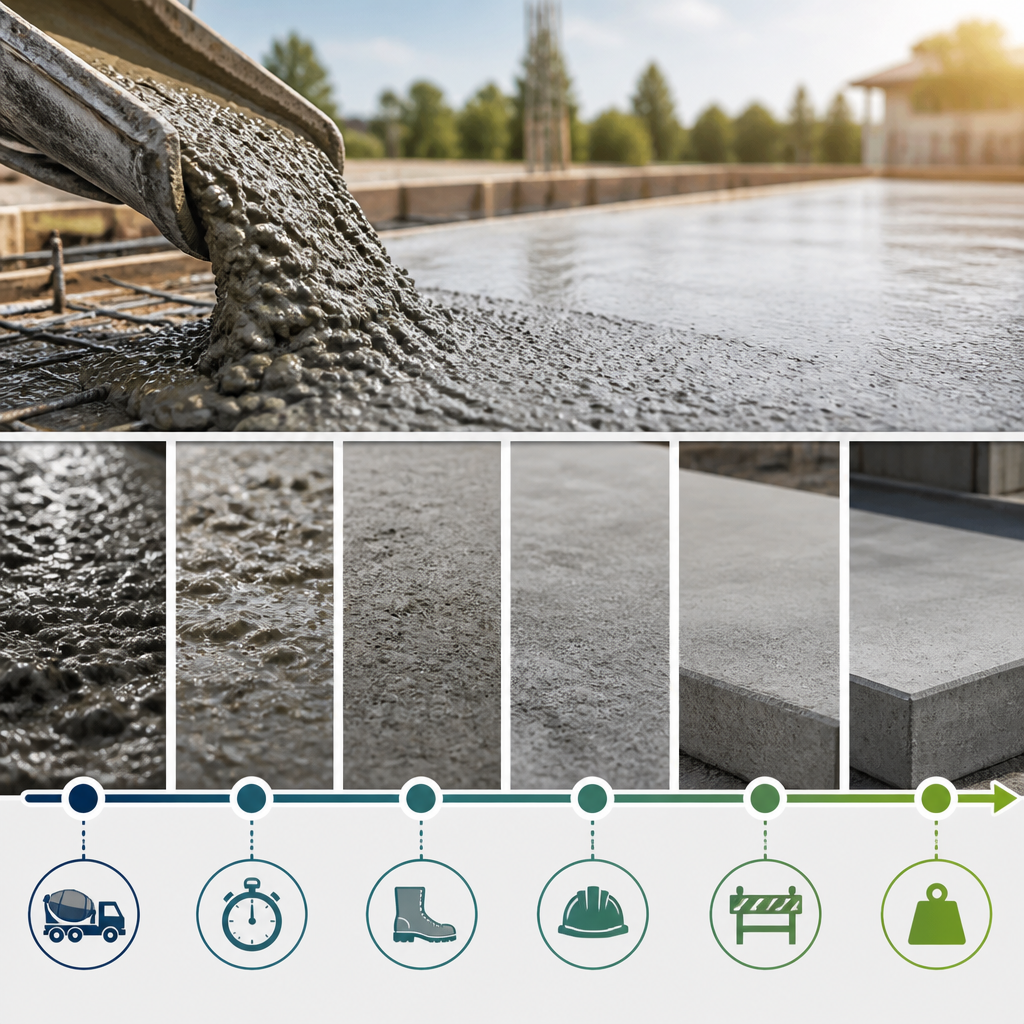
When planning a construction project, one of the most common questions people ask is: “How long does it take concrete to set?” Whether you’re installing a new driveway, pouring foundations, building a patio, or laying a commercial concrete slab, understanding the concrete setting process is crucial for avoiding delays and ensuring long-term durability.
Many people assume concrete dries overnight and is ready to use the next day. In reality, concrete undergoes a chemical curing process that continues for weeks after it’s poured.
In this guide, we’ll explain the complete concrete setting timeline, the difference between setting and curing, factors that affect drying times, and when it’s safe to walk, drive, or build on newly poured concrete.
If you’re planning a project in London, Kent, Essex, or surrounding areas, Concrete King provides high-quality concrete products, expert advice, competitive pricing, and fast, reliable delivery to help keep your project on schedule.
Before discussing timelines, it’s important to understand what “setting” actually means.
When concrete is mixed with water, a chemical reaction called hydration begins.
During this process:
Setting is simply the point at which the concrete begins to harden and can support limited weight.
However, concrete continues gaining strength long after the initial set.
For most standard concrete mixes:
Approximately:
2 to 4 hours
During this stage:
Approximately:
4 to 10 hours
At this point:
However, the concrete is still far from reaching its full strength.
Many people confuse concrete setting with concrete curing.
They are not the same thing.
Concrete Setting: Setting occurs during the first few hours after pouring. This is when the concrete changes from a liquid state to a solid state.
Concrete Curing: Curing is the longer process of strength development.
This process continues for:
The majority of concrete reaches its design strength after approximately 28 days.
Understanding the full timeline helps avoid costly mistakes.
The initial setting process begins.
Concrete starts losing its plasticity and becomes more rigid.
Most concrete can support light foot traffic.
At this stage:
However, heavy loads should still be avoided.
Concrete continues gaining strength rapidly.
Many residential projects can proceed cautiously with light work nearby.
Concrete typically reaches around:
70% of its designed strength
This is a significant milestone.
Many structural elements can safely support moderate loads.
Concrete generally reaches:
95% to 100% of its specified design strength
This is the industry standard curing period used for structural testing and quality assurance.
No two concrete pours are exactly the same. Several factors can speed up or slow down the setting process.
Temperature has a major impact on curing.
Concrete sets faster because water evaporates more quickly.
However, excessively rapid drying can increase the risk of:
Concrete sets more slowly.
Low temperatures delay hydration and can significantly extend curing times.
Different concrete mixes are engineered for different purposes.
Factors include:
Specialist mixes can be formulated for:
Moderate humidity often helps maintain moisture during curing.
Very dry conditions can accelerate water loss and affect strength development.
Strong winds can increase surface evaporation rates.
This is particularly important for large slabs and exposed surfaces.
For most residential projects:
Usually:
24 to 48 hours after pouring
Examples include:
Avoid dragging heavy equipment across the surface during this period.
For driveways and vehicle areas:
Generally:
7 days minimum
Many contractors recommend waiting closer to:
10 days where possible
This allows sufficient strength development.
Commercial vehicles, skips, and plant equipment should usually wait:
28 days
unless otherwise advised by a structural engineer.
Proper curing is essential for achieving maximum strength and durability.
Moisture retention supports ongoing hydration.
Methods include:
Don’t rush the process.
Applying weight too early can cause:
Fresh concrete should be protected from:
Working with experienced suppliers helps ensure the correct mix is chosen for the project.
The team at Concrete King regularly advises homeowners, builders, and developers on suitable concrete products for residential and commercial applications.
Most concrete can support light foot traffic after approximately 24 to 48 hours, depending on weather conditions and mix design.
For standard residential driveways, wait at least 7 days before driving on the surface. Longer curing periods provide better long-term durability.
Yes. Warm temperatures generally accelerate the setting process. However, excessive heat can cause rapid moisture loss, which may affect strength and surface quality.
Yes. Concrete King offers fast and reliable concrete delivery throughout London, Kent, Essex, and surrounding areas to help keep projects running smoothly.
So, how long does it take concrete to set? Most concrete begins setting within 2 to 4 hours, can usually support foot traffic after 24 to 48 hours, reaches around 70% strength within 7 days, and achieves its full design strength after approximately 28 days. Understanding this timeline helps prevent costly mistakes and ensures your project achieves the durability and performance expected.
Whether you’re pouring a driveway in Bromley, laying foundations in Chelmsford, installing a patio in Maidstone, or managing a commercial development in Stratford, choosing the right supplier is just as important as understanding curing times.
Concrete King is trusted across London, Kent, Essex, and surrounding areas for premium-quality concrete, competitive prices, expert advice, and dependable delivery.
Whether it’s the amount of ready mixed concrete to be used for concrete slabs, or working out how much needs to be combined with coarse aggregate, we’ve got the solution.
To place your order or to discuss your requirements further please contact our friendly team today who will be happy to help with the concrete mix calculator.
Visit our Concrete Calculator page where you can access more calculate options.