
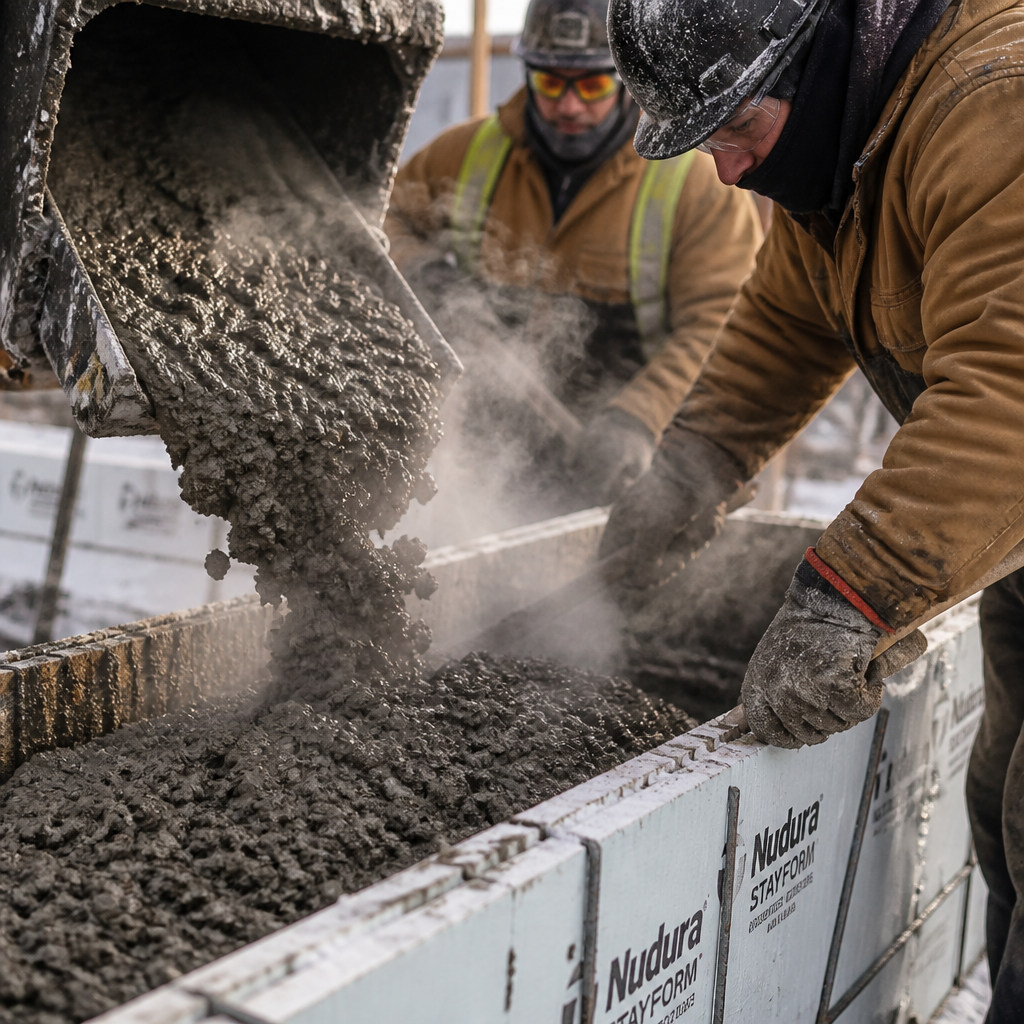
Cold weather can create serious challenges for concrete projects. Whether you’re laying a driveway in Romford, pouring foundations in Chelmsford, or working on a commercial site in Stratford, temperature plays a major role in the strength, durability, and long-term performance of concrete.
One of the most common questions builders, contractors, and homeowners ask during winter is: When can you place concrete in cold weather safely?
The answer is not as simple as checking the forecast. Concrete reacts differently in low temperatures, and placing it incorrectly can lead to cracking, reduced strength, surface scaling, delayed curing, and costly repairs.
In this expert guide, we’ll explain exactly when and how to place concrete in cold weather safely, the risks to avoid, best practices for winter concreting, and why working with an experienced supplier like Concrete King can make all the difference.
If you’re planning a residential, commercial, or construction project across London, Kent, Essex, Barking, Bromley, Dartford, Maidstone, Southend, Basildon, or nearby areas, this guide will help you protect your investment and achieve professional results.
In the construction industry, cold weather concreting typically refers to conditions where:
These conditions are common during winter across many UK locations, including Barnet, Chigwell, Sevenoaks, Brentwood, Bexleyheath, and Bishop’s Stortford.
Concrete can still be placed safely in cold weather, but extra precautions are necessary to ensure proper curing and strength development.
Concrete relies on a chemical reaction called hydration. Hydration occurs when cement mixes with water, generating heat and gradually hardening over time. Cold temperatures slow this process significantly.
If temperatures drop too low, hydration can almost stop completely. Worse still, if water inside fresh concrete freezes before sufficient strength develops, the concrete structure can become permanently damaged.
This can lead to:
That’s why experienced contractors across London, Kent, Essex, and surrounding areas take winter concrete placement seriously.
Concrete can generally be placed safely in cold weather if the temperature remains above 5°C and proper protective measures are used.
However, professional contractors often continue pouring concrete even when temperatures are lower by using specialist techniques and high-quality concrete mixes.
The key factors include:
Frozen ground should never be used for concrete placement.
If the ground beneath the slab freezes and later thaws, it can cause movement, cracking, and settlement issues.
Fresh concrete should ideally be delivered warm enough to maintain hydration during the early curing phase.
Avoid pouring concrete when freezing temperatures are expected shortly after placement unless protective measures are in place.
Using insulation blankets, heated enclosures, or accelerators can help concrete cure safely in colder conditions.
This is why many builders and property owners in Bromley, Grays, Tilbury, Orpington, Sidcup, and Harlow work with trusted suppliers like Concrete King for expert advice and reliable winter-ready concrete solutions.
Fresh concrete is extremely vulnerable during the first 24 to 48 hours.
If it freezes too early:
Even if the concrete appears fine visually, internal structural weakness may already exist.
This is one of the biggest reasons why professional planning and quality concrete supply are essential during winter construction projects.
The ideal temperature range for placing concrete is generally between 10°C and 21°C. This allows proper hydration without excessive evaporation or freezing risks.
That said, concrete can still be poured in colder conditions with the right precautions.
Professional suppliers may adjust mixes using:
These adjustments help improve curing performance during cold weather.
Concrete King provides high-quality concrete suitable for winter applications across London, Kent, Essex, and nearby areas, helping contractors maintain productivity throughout colder months.
Never pour concrete onto frozen soil, ice, or snow. The ground should be thawed and stable before placement begins.
Winter concreting often requires specially designed mixes to improve curing speed and durability.
Working with experienced suppliers is critical.
Fresh concrete should be covered using insulated blankets or temporary coverings to retain heat.
Adding extra water weakens concrete and increases freezing risks.
Timing matters in winter. Efficient delivery reduces exposure to cold temperatures before placement.
Concrete King is known for fast and reliable concrete delivery across Barking, Dagenham, Stratford, Ilford, Gravesend, Rochester, Sittingbourne, Rainham, and surrounding areas.
Concrete cures much more slowly during cold weather. While concrete may begin setting within several hours, full curing takes significantly longer in winter conditions.
Typical timelines include:
Lower temperatures can extend these timelines further.
Proper curing is essential to prevent surface defects and ensure long-term durability.
Identifying cold-weather damage early can help prevent bigger issues later.
Watch for:
Flaking or peeling on the concrete surface.
Visible cracks may indicate freezing damage during curing.
Weak powdery surfaces can suggest improper curing.
Uneven colouring may result from inconsistent curing temperatures.
Concrete may feel brittle or fail under pressure if hydration was interrupted.
If you suspect winter damage, consulting a professional concrete expert is highly recommended.
Across London, Kent, Essex, & Beyond, Concrete King has built a strong reputation for supplying high-quality concrete products with exceptional service.
Concrete King supplies premium concrete suitable for residential, commercial, and construction projects year-round.
Customers benefit from affordable rates without compromising on quality.
Timely delivery is especially important during winter weather conditions.
The team helps customers choose the right concrete mix for cold-weather applications.
From Mayfair to Maidstone, Chelmsford to Chigwell, and Basildon to Bromley, Concrete King continues to support contractors, builders, and homeowners with dependable service.
For the best prices and expert guidance, call 0203 039 3170 today.
Sudden overnight freezing poses one of the biggest risks to fresh concrete.
Thermal blankets help retain heat during the critical curing phase.
Bad weather can compromise surface quality and curing performance.
Winter concrete projects require more preparation than summer work.
Reliable scheduling and supplier coordination are essential.
Yes. Concrete can be placed safely in cold weather when temperatures are managed correctly and protective measures are used to prevent freezing during curing.
Concrete placement becomes risky when temperatures fall below 5°C, especially if freezing conditions are expected within the first 24 hours.
Yes. Concrete King supplies high-quality concrete throughout winter across London, Kent, Essex, and surrounding areas, including Romford, Dartford, Stratford, Chelmsford, and Southend.
Fresh concrete should usually be protected for at least 24–48 hours after pouring, although colder conditions may require longer protection periods.
Yes. If concrete freezes before gaining sufficient strength, it can suffer permanent structural damage and reduced durability.
Placing concrete in cold weather safely requires careful planning, proper materials, and expert execution. While colder temperatures create additional challenges, successful winter concreting is entirely possible with the right preparation and professional support.
Whether you’re installing a driveway in Bromley, pouring foundations in Chelmsford, or managing a commercial project in Stratford, using high-quality concrete and working with experienced suppliers is essential.
That’s why builders, contractors, and homeowners across London, Kent, Essex, Barking, Romford, Southend, Maidstone, Basildon, and nearby areas trust Concrete King for reliable service and premium concrete solutions.
If you need:
then contact Concrete King today, call 0203 039 3170 or visit Concrete King to request a quote and get expert support for your next concrete project.
Whether it’s the amount of ready mixed concrete to be used for concrete slabs, or working out how much needs to be combined with coarse aggregate, we’ve got the solution.
To place your order or to discuss your requirements further please contact our friendly team today who will be happy to help with the concrete mix calculator.
Visit our Concrete Calculator page where you can access more calculate options.