Moss growing on concrete may seem harmless at first, but over time, it can create serious problems for homeowners, businesses, and construction sites alike. From slippery surfaces and structural moisture issues to unattractive driveways and patios, moss can quickly turn quality concrete into a maintenance headache.
If you’re searching for how to permanently remove moss from concrete, the good news is that there are safe, effective, and long-lasting solutions available. The key is understanding why moss develops in the first place and using the right cleaning and prevention methods without damaging the concrete surface.
Whether you own a residential property in Bromley, manage a commercial site in Chelmsford, or oversee a construction project in Dartford, this guide explains everything you need to know about removing moss permanently and keeping your concrete clean, safe, and durable.
For expert advice, premium-quality concrete, and fast delivery across London, Kent, Essex, and surrounding areas, Concrete King remains a trusted choice for homeowners, builders, and contractors alike.
Moss thrives in damp, shaded, and poorly ventilated areas. Concrete surfaces naturally absorb moisture, especially older or porous concrete, making them ideal environments for moss growth.
Common causes include:
Driveways, patios, garden paths, walls, and concrete slabs in areas like Chigwell, Sidcup, Rainham, and Sevenoaks often experience moss problems due to the UK’s wet climate.
Many property owners delay moss removal because it appears cosmetic. However, moss can create long-term structural and safety concerns.
Wet moss becomes extremely slippery, increasing the risk of accidents on walkways, driveways, patios, and commercial entrances.
Moss traps moisture against the concrete surface. Over time, this can weaken the material and contribute to cracking, erosion, and freeze-thaw damage during colder months.
Moss-covered concrete makes properties look neglected and poorly maintained, which can affect property value and business reputation.
Persistent moisture can shorten the lifespan of concrete surfaces, leading to expensive repairs or replacements.
Removing moss permanently requires more than simply scrubbing the surface. The goal is to eliminate existing moss while stopping future regrowth.
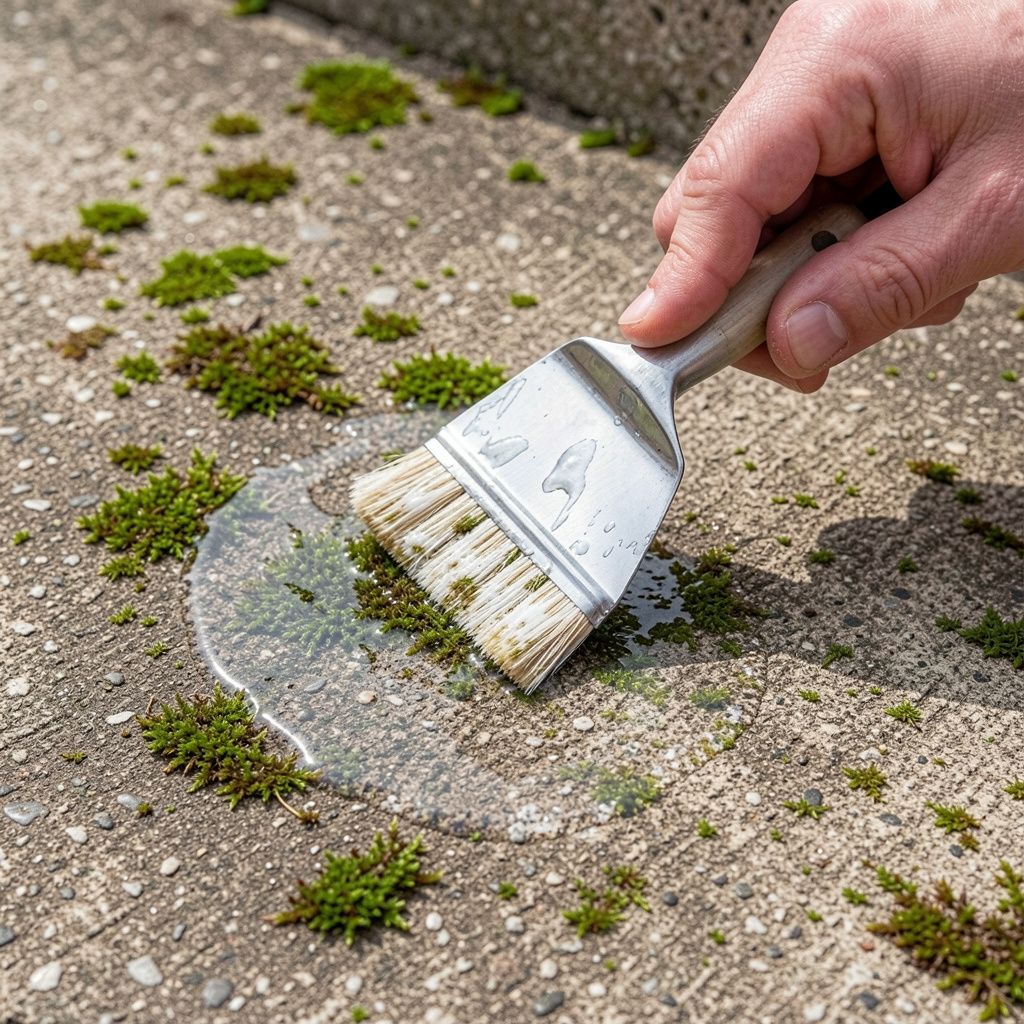
Start by sweeping the area thoroughly using a stiff outdoor broom. Remove leaves, dirt, and loose moss to expose the affected surface.
For thicker moss growth, use a scraper or hard-bristle brush.
There are several effective treatments available depending on the severity of the moss growth.
A mixture of white vinegar and water is one of the safest DIY moss killers for concrete.
This works well for light moss growth on patios and garden paths.
For heavier infestations, diluted bleach can be effective.
Always wear protective gloves and avoid surrounding plants.
Professional-grade moss removers provide longer-lasting results and are ideal for larger surfaces or commercial sites.
These products are especially useful for driveways, forecourts, and construction areas in busy locations like Stratford, Romford, and Southend.
Pressure washing helps remove stubborn moss residue and restores the appearance of the concrete.
However, excessive pressure can damage weaker or ageing concrete surfaces.
If the concrete is old or already deteriorating, professional cleaning advice is recommended.
Moss returns quickly to damp surfaces. Proper drying is essential before applying sealants or preventative treatments.
Improve airflow where possible and trim nearby vegetation to increase sunlight exposure.
Different surfaces require different approaches. Here’s a quick breakdown.
Use vinegar solutions or light pressure washing for safe cleaning without damaging decorative finishes.
Commercial moss removers combined with professional pressure washing work best for large driveway surfaces.
For retail parks, warehouses, and construction sites in places like Basildon, Gravesend, and Ilford, professional-grade treatment and concrete sealing provide the most durable results.
Yes, incorrect pressure washing can damage concrete surfaces.
Using extremely high pressure may:
This is why many property owners choose professional advice before cleaning large concrete areas.
Concrete King regularly supports residential and commercial clients with expert guidance on concrete care, maintenance, and replacement solutions.
If you truly want to permanently remove moss from concrete, prevention is just as important as cleaning.
Standing water encourages moss growth. Ensure water drains properly away from concrete surfaces.
Trim trees, hedges, and overgrown plants that create excessive shade.
A quality concrete sealer reduces moisture absorption and protects the surface from moss, algae, and staining.
This is one of the most effective long-term prevention methods.
Simple routine cleaning prevents moss from establishing itself.
Choosing the right concrete supplier matters just as much as maintaining the surface itself.
Concrete King has built a strong reputation across London, Kent, Essex, and surrounding areas for supplying high-quality concrete backed by reliable customer service and expert support.
Customers throughout Barking, Brentwood, Rochester, Dagenham, Wickford, Sittingbourne, Barnet, and beyond trust Concrete King because we offer:
Our experienced team helps ensure every project starts with the right materials for long-lasting durability.
Concrete King proudly supplies concrete across:
Barking, Bexleyheath, Borehamwood, Canvey Island, Chingford, Dagenham, Faversham, Grays, Medway, Orpington, Romford, Sittingbourne, Tilbury, Barnet, Billericay, Brentwood, Chelmsford, Dartford, Gatwick, Godstone, Harlow, Ilford, Maidstone, Rainham, Sevenoaks, Slough, Tunbridge Wells, Basildon, Bishop’s Stortford, Bromley, Chigwell, Enfield, Gravesend, Hornchurch, Mayfair, Rochester, Sidcup, Stratford, Southend, Wickford, and nearby areas.
To permanently remove moss from concrete, clean the surface thoroughly, apply a moss-killing treatment, pressure wash carefully, improve drainage, and seal the concrete to prevent moisture absorption.
Yes, vinegar can kill light moss growth effectively, but long-term prevention also requires reducing moisture and improving sunlight exposure.
Yes. Moss traps moisture against concrete, which can lead to cracking, surface erosion, and faster deterioration over time.
Pressure washing is effective, but excessive pressure can damage concrete. Moderate pressure and proper technique are recommended for safe cleaning.
Concrete King supplies premium-quality concrete with fast delivery across areas including Romford, Chelmsford, Bromley, Basildon, Maidstone, and surrounding locations. Call 0203 039 3170 for expert advice and competitive prices.
Knowing how to permanently remove moss from concrete can help protect your property, improve safety, and extend the lifespan of your surfaces. The right combination of cleaning, moisture control, sealing, and ongoing maintenance makes a significant difference.
If your concrete is heavily damaged or you’re planning a new project, working with a reliable supplier is essential.
Concrete King continues to be a trusted choice for homeowners, contractors, and businesses across London, Kent, Essex, and beyond, with high-quality concrete, unbeatable prices, fast delivery, and expert support.
For reliable concrete solutions and professional advice, call 0203 039 3170 today or visit Concrete King to request a quote.
Whether it’s the amount of ready mixed concrete to be used for concrete slabs, or working out how much needs to be combined with coarse aggregate, we’ve got the solution.
To place your order or to discuss your requirements further please contact our friendly team today who will be happy to help with the concrete mix calculator.
Visit our Concrete Calculator page where you can access more calculate options.