
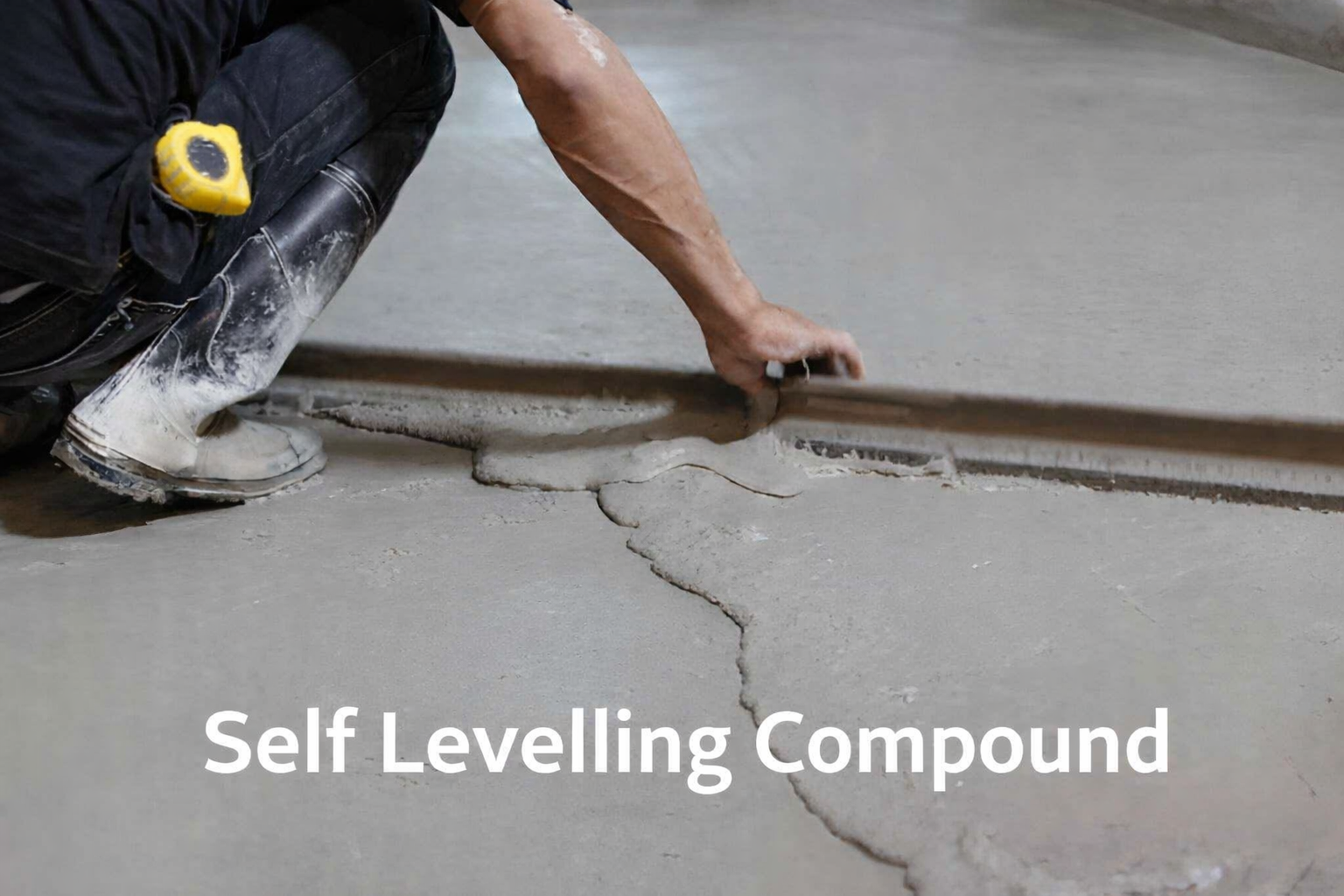
Uneven floors are more than just an eyesore. They can cause problems when installing tiles, vinyl, laminate, or even carpet. This is where Self Levelling Compound comes in. It is one of the most effective materials used in modern flooring preparation, yet many people are unsure what it actually does and when it should be used.
This guide explains what self levelling compound is, how it works, and the exact situations where it makes sense to use it. Whether you are a homeowner planning a renovation or a contractor preparing a subfloor, this article will give you clear, practical answers.
Self levelling compound is a cement based material designed to create a smooth, flat surface over uneven floors. Once mixed with water and poured onto a surface, it spreads easily and settles on its own, filling low spots and covering minor imperfections.
Despite the name, it does not do all the work by itself. It still needs to be guided and applied correctly, but it requires far less manual effort than traditional screeds or patching methods.
Self levelling compound is commonly used on concrete subfloors, but it can also be applied over existing surfaces like tiles, wood, or old screed, as long as the surface is properly prepared.
The compound has a very fluid consistency. This allows gravity to pull it into low areas while naturally smoothing out high spots. Once poured, it begins to settle within minutes and gradually levels itself across the floor.
Most products start setting quickly, often within 20 to 40 minutes. Light foot traffic is usually possible within a few hours, and many floors are ready for final coverings within 24 hours.
This fast curing time is one of the main reasons self levelling compound is so popular on both residential and commercial projects.
Self levelling compound is not a finishing floor. It is a preparation layer used before installing the final surface. Its main purpose is to create a flat, even base so that the finished floor looks better and lasts longer.
Here are the most common uses:
Concrete floors often look flat but usually contain dips, ridges, and rough patches. These imperfections become a problem when installing tiles, vinyl, or laminate. Self levelling compound corrects these issues and creates a clean, uniform surface.
Tile and vinyl flooring require a very flat base. Even small bumps can cause tiles to crack or vinyl to lift over time. Using self levelling compound helps prevent these issues by ensuring proper adhesion and support.
Small cracks, surface pitting, and shallow holes can be covered with self levelling compound. It is not designed for major structural repairs, but it works well for cosmetic and surface level problems.
Underfloor heating systems often require a smooth, even layer to distribute heat evenly. Self levelling compound is commonly poured over heating pipes or mats to protect the system and create a stable base for the final floor finish.
Knowing when to use self levelling compound is just as important as knowing what it is.
You should consider using it when:
It may not be suitable if the floor has major structural damage, large cracks caused by movement, or severe moisture problems. In those cases, the underlying issue must be fixed first.
Experienced suppliers and contractors like Concrete King often assess the condition of the subfloor before recommending self levelling compound. This ensures the right product is used for the specific situation.
Not all self levelling compounds are the same. Choosing the right one depends on the surface and the environment.
These are the most common and are suitable for internal use. They work well on concrete subfloors and dry relatively quickly.
Latex compounds are more flexible and are often used on wooden floors or surfaces that may experience slight movement. They offer better adhesion and reduced cracking.
Designed for projects with tight deadlines, fast drying compounds allow flooring to be installed within hours rather than days.
Concrete King supplies a range of high quality self levelling compounds suitable for different applications, helping customers choose the right option for their project rather than relying on guesswork.
Proper application is key to getting good results.
The floor must be clean, dry, and free from dust, grease, or loose material. Cracks should be repaired and the surface primed if required.
Follow the manufacturer’s instructions carefully. Too much water weakens the compound, while too little makes it difficult to spread.
Pour the compound onto the floor and gently guide it using a smoothing tool or trowel. Work quickly, as it will begin to set fast.
Avoid walking on the surface until it has fully set. Curing times vary depending on the product and room conditions.
Professionals often prefer sourcing materials from reliable suppliers like Concrete King to ensure consistent quality and predictable results on site.
Self levelling compound is easy to use, but mistakes can still happen.
Skipping surface preparation is one of the biggest issues. Poor cleaning or missing primer can cause the compound to fail or lift later.
Another common mistake is mixing too much at once. Because the compound sets quickly, working in manageable batches leads to better results.
Finally, using the wrong type of compound for the surface can lead to cracking or poor adhesion.
Most self levelling compounds are designed for thin applications, usually between 2mm and 10mm. Some specialist products allow thicker pours, but these should be used carefully.
For deeper areas, multiple layers or alternative floor repair methods may be required. A trusted supplier like Concrete King can advise on the best approach based on floor depth and condition.
For most flooring projects, the answer is yes. It saves time, improves the final appearance of the floor, and reduces the risk of future problems. Compared to traditional methods, it offers a cleaner, faster, and more reliable solution.
When used correctly, self levelling compound creates a professional standard base that makes all types of flooring installations easier and more durable.
Self levelling compound plays a vital role in modern flooring preparation. It solves common problems like uneven surfaces, poor adhesion, and visible floor defects. Knowing when and how to use it can make the difference between a floor that lasts and one that fails prematurely.
If you are planning a flooring project and want expert guidance, trusted materials, and reliable advice, exploring the resources and products available at Concrete King can help you make informed decisions with confidence. Our experience in concrete and floor preparation solutions makes us a dependable reference point when quality truly matters.
Whether it’s the amount of ready mixed concrete to be used for concrete slabs, or working out how much needs to be combined with coarse aggregate, we’ve got the solution.
To place your order or to discuss your requirements further please contact our friendly team today who will be happy to help with the concrete mix calculator.
Visit our Concrete Calculator page where you can access more calculate options.