Floor screed plays a quiet but critical role in construction and renovation. It is not something most people see once a project is finished, yet it has a huge impact on how strong, level, and long-lasting a floor will be. If you are planning any form of flooring work, understanding floor screed types and their uses will help you make better decisions and avoid costly mistakes.
This guide explains what floor screed is, the main types available, and where each one is best used. The aim is to give clear, practical information without unnecessary complexity.
Floor screed is a smooth, level layer of material applied over a concrete subfloor. Its main purpose is to create a flat surface ready for the final floor finish, such as tiles, vinyl, wood, or carpet.
Screed is usually made from cement and sand, although modern variations include liquid and polymer based options. It is commonly used in homes, commercial buildings, and industrial spaces.
A well installed screed improves the strength, durability, and appearance of a floor. It helps distribute loads evenly, protects underfloor heating systems, and ensures floor coverings sit properly.
Poor screeding can lead to cracking, uneven finishes, and premature floor failure. This is why choosing the right type of floor screed matters just as much as proper installation.
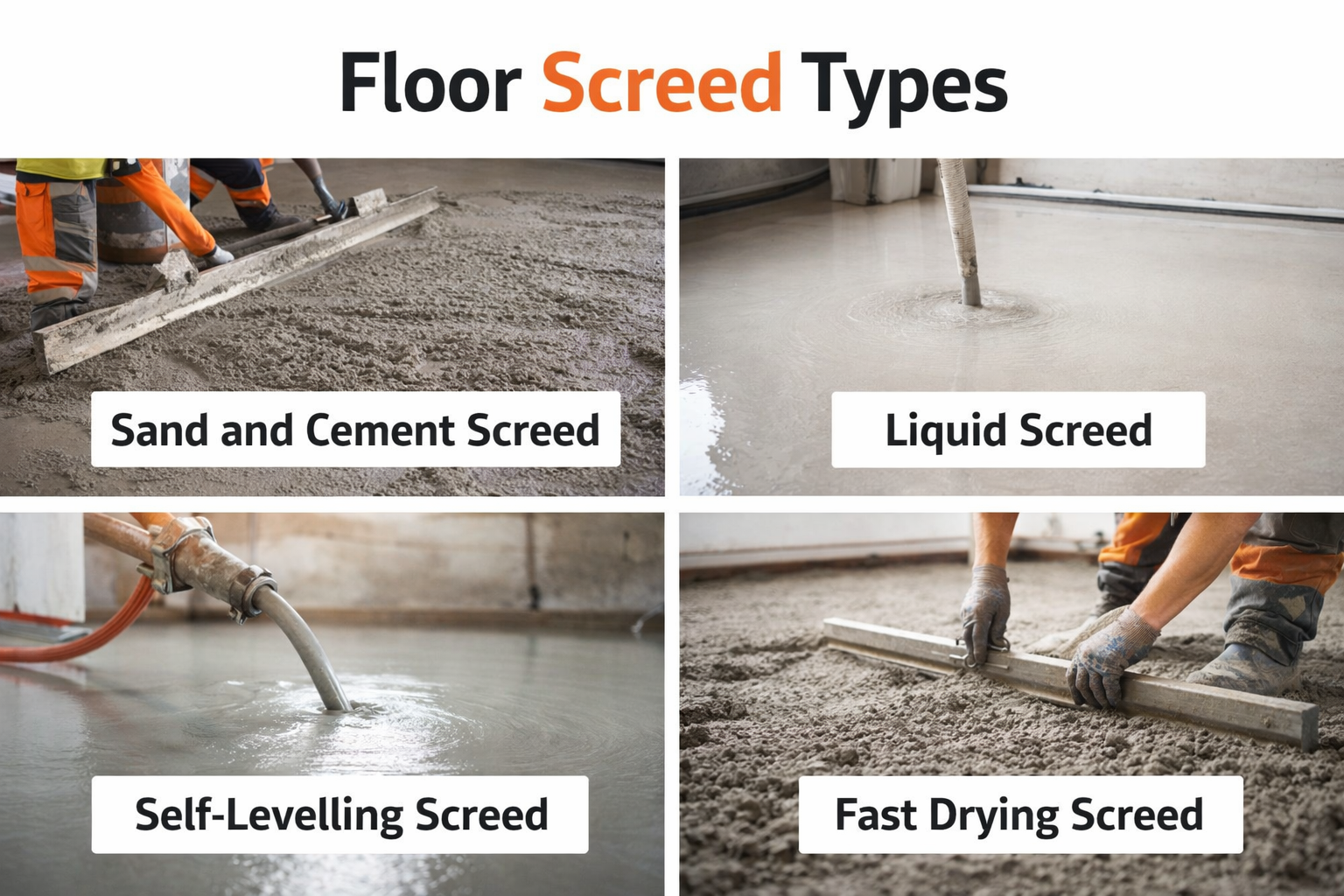
Sand and cement screed is the most commonly used type of floor screed. It is mixed on site using cement, sharp sand, and water.
This type of screed is suitable for domestic floors, small commercial spaces, and areas without tight time constraints. It works well in living rooms, bedrooms, and offices.
Drying times are longer compared to modern alternatives. Floors usually need several weeks before final coverings are installed.
Liquid screed, also known as flowing screed, has become increasingly popular in recent years. It has a much more fluid consistency than traditional screed.
Liquid screed is ideal for large floor areas and properties with underfloor heating. It flows easily around pipes and cables, creating a smooth and even finish.
Liquid screed dries faster and often allows earlier foot traffic. It is commonly used in modern homes, apartments, and commercial developments.
Polymer screed includes additives that improve flexibility, strength, and adhesion.
This type of floor screed is suitable for thinner applications, refurbishment projects, and areas where extra durability is needed. It is often used in bathrooms, kitchens, and balconies.
Concrete King regularly supplies polymer screeds for projects where standard mixes may not perform well.
Fast-drying screed is designed for projects with strict timelines. It allows floors to be covered much sooner than traditional screed.
This screed is commonly used in commercial spaces, retail units, and renovations where downtime must be kept to a minimum.
While fast-drying screeds cost more, they can save money overall by speeding up completion.
Fibre-reinforced screed contains small fibres mixed into the material to improve strength and reduce cracking.
This screed is often used over underfloor heating systems and in areas exposed to temperature changes.
It offers extra peace of mind for floors exposed to movement or thermal expansion.
The right floor screed depends on several factors. These include the type of building, floor usage, drying time requirements, and whether underfloor heating is installed.
For example, a home renovation with flexible timelines may suit sand and cement screed, while a new build with underfloor heating may benefit from liquid screed.
Experienced suppliers like Concrete King help clients choose the correct screed based on real-world conditions rather than guesswork.
One common mistake is choosing screed based on price alone. Cheaper options may lead to higher costs later if repairs are needed.
Another issue is poor preparation. The subfloor must be clean, stable, and properly primed before screed application.
Finally, rushing the drying process can cause cracks or weak spots. Each type of floor screed has specific curing requirements that should be respected.
Floor screed may not be the most visible part of a building project, but it is one of the most important. Understanding the different floor screed types and their uses helps ensure a solid foundation for any floor finish.
If you want reliable information, quality materials, or expert guidance for your next project, exploring the resources and services available at Concrete King is a smart place to start. Our experience in concrete and screed solutions can help you make informed choices and achieve long-lasting results with confidence.




Whether it’s the amount of ready mixed concrete to be used for concrete slabs, or working out how much needs to be combined with coarse aggregate, we’ve got the solution.
To place your order or to discuss your requirements further please contact our friendly team today who will be happy to help with the concrete mix calculator.
Visit our Concrete Calculator page where you can access more calculate options.